
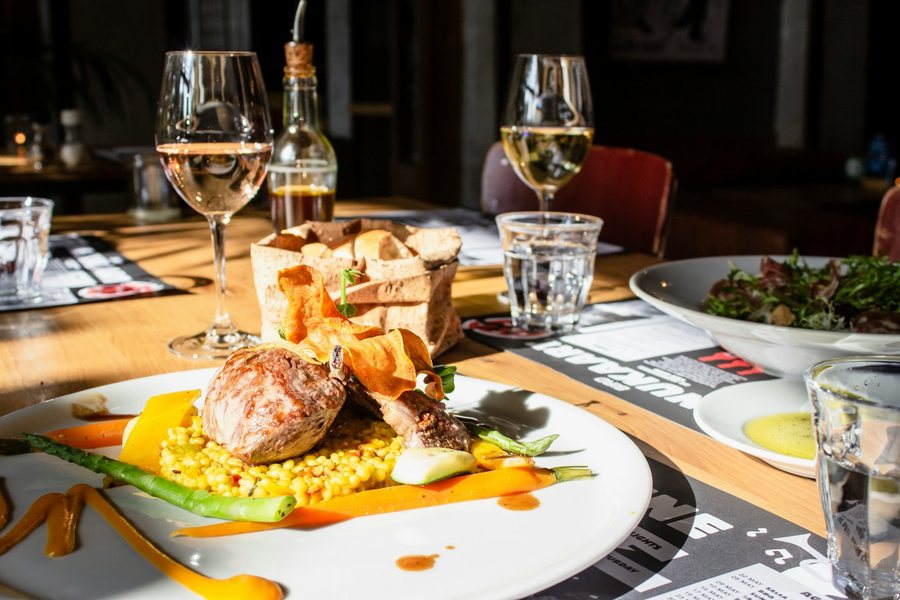
Most Miami restaurants are marketing to people who already know about them.
The account looks good. The food photographs well. The followers are real. And the Tuesday covers have not moved in a year — because everything being published is being seen by people who have already eaten there.
Filling tables is a discovery and friction problem, not a content-volume problem.
How people actually choose where to eat here
The path is remarkably consistent:
- A recommendation, or a video that made them stop
- A search — increasingly inside Instagram, TikTok or Maps rather than Google
- A quick scan for evidence: recent photos, the menu, the price, whether it looks busy
- A check that they can actually get in
- Booking, or a DM
Restaurants lose people at step three and step four far more often than at step one. The marketing worked; the page did not.
Fix the findable layer first
- Your Google Business Profile is your homepage, whether you like it or not. Hours correct, menu linked, photos from this year, every review answered.
- Say the food in words. Captions and on-screen text are what makes you findable in in-app search. An aesthetic post with a three-word caption is invisible to someone searching "best pasta Brickell."
- Publish the menu as text on your own site. Not a PDF, not an image. It is the single most-visited page you have and the one most often broken on a phone.
- Show the price. Ambiguity about cost loses more bookings than a high number does.
- Make booking one tap from the profile. Every extra step costs covers.
What to publish
A workable weekly rotation:
- The room at 8:40pm on a Friday. Full, loud, alive. Atmosphere is the product and atmosphere is other people. Not the empty dining room at 4pm with beautiful light.
- One dish, shot close, in motion. The pour, the cut, the steam, the pull.
- A person. The chef, the bartender, whoever has an opinion. Faces build familiarity faster than plates.
- An answerable question. Where to sit for a first date. What to order if it is your first time. What is open on a Monday.
- The direct ask. This week's availability, the new menu, the reason to come now.
The operational things that outperform content
- Answer DMs within the hour in the evening. A message at 8pm is a booking decision in progress. By morning it is somebody else's cover.
- Reply to every review, especially the bad ones, without defensiveness. Prospective diners read the response more carefully than the complaint.
- Collect emails at the table. The one audience you own. A short list of people who have already eaten your food is worth more than any following.
- Fix the slow night deliberately. A standing Tuesday reason — a menu, a guest, a price — beats a general discount that trains everyone to wait.
Creators, done properly
Miami has more food creators than almost any city in the country, and most restaurant collaborations here are transactional and forgettable.
What works: a small number of local creators, invited repeatedly rather than once, briefed on what makes the place different, and paid rather than compensated in food alone. A creator on their third visit makes content that sounds like a regular. A creator on their first makes content that sounds like an ad, because it is one.
Rate context is here; the case for a standing roster is here.
The Miami-specific parts
- Bilingual, genuinely. Menus, captions and the person answering DMs. Not translated — written for each audience.
- Season inverts everything. October through April is a different business from July. The season playbook covers the shift.
- Event weeks change the customer. Art Week, the Grand Prix, boat show weekends. Publish specifically for those visitors; they are searching with intent and a forty-minute time horizon.
- Locals remember December. Restaurants that spend the season chasing visitors and ignore regulars pay for it in August.
What to measure
Covers, obviously — but the leading indicators are saves and shares on content, profile-to-booking rate, DM response time, and the split between new and returning guests. Followers tell you almost nothing about whether Tuesday is busy.
The bottom line
Be findable, be legible, be bookable in one tap, and answer messages fast. Publish the full room, the close-up dish, the person, and the direct ask. Then work the local creators repeatedly rather than once.
For a current example, see how DaVinci Gelato is opening a second shop in Lauderdale-by-the-Sea.
Want your restaurant marketing built around covers? Let's talk.