
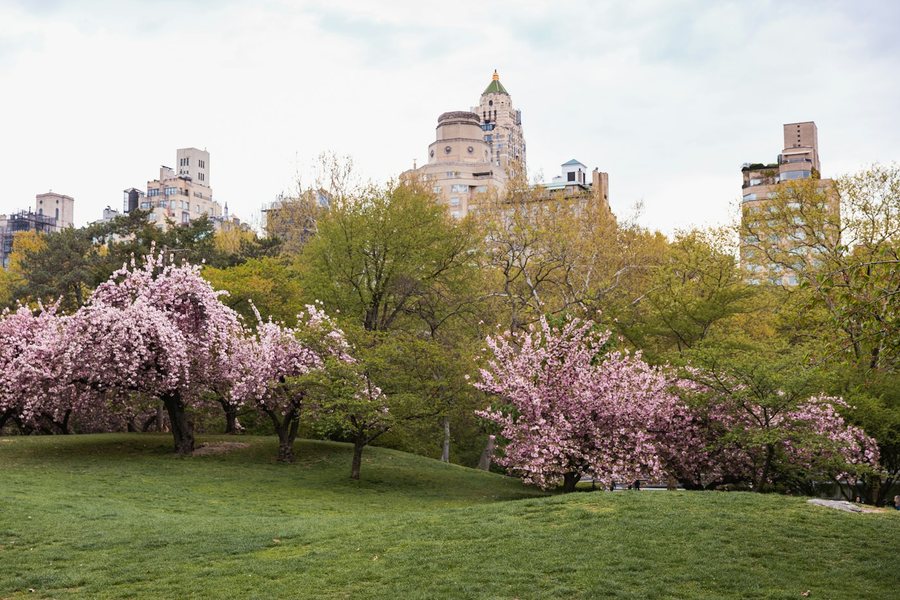
New York's spring is a series of moments, not a season.
Miami's calendar concentrates — Art Week, the Grand Prix, high season. New York's spreads: a run of overlapping cultural, fashion, food and sporting moments from roughly March through June, none of which dominates the city the way Art Week dominates Miami.
That difference matters more than the specific dates, because it changes the strategy. In Miami you pick a week and own an evening in it. In New York you pick a community and show up repeatedly.
Dates for the moments below shift year to year — confirm each on its own source before committing budget. What follows is how to think about the season, not a schedule.
The categories worth planning around
Fashion and design moments
Heavily saturated, expensive, and dominated by brands with permanent presence in the city. Worth activating around only if fashion is your actual category. Otherwise you are paying premium rates to be the least interesting thing in the room.
Food and drink
Spring brings a dense run of food festivals, restaurant openings and drink programmes. Genuinely accessible to mid-size brands, because the audience is broad and the competition for attention is lower than fashion.
Art and gallery season
Openings run continuously rather than concentrating. The advantage: you can support an existing programme any week of the season rather than competing for one crowded weekend.
Sport and outdoor
Tennis, running, park programming, rooftop season opening. Large, less brand-saturated audiences and a strong fit for wellness, beverage and apparel.
The rooftop and terrace turn
The most under-rated moment in the New York calendar. The first genuinely warm weekend produces an enormous, predictable behavioural shift, and almost nobody plans for it because it has no fixed date.
How to plan a market you do not live in
This is the part most brands get wrong, and it is the same mistake visiting brands make in Miami.
- Hire locally before you decide anything. A local producer or creative director will tell you which neighbourhood, which night, and which of your assumptions is wrong.
- Pick one neighbourhood. New York is not one market. An activation downtown and an activation in Brooklyn are different events with different guest lists.
- Do not fly the guest list in. If nobody local is in the room, you have hosted an offsite.
- Plan for repetition, not spectacle. Three modest appearances across a season outperform one large event in a city with this much competing activity.
- Book earlier than feels necessary. Spring venues commit in winter.
Choosing what to skip
The most valuable planning decision is usually subtraction. A moment is worth activating around only if:
- Your actual customer is there, in numbers
- You can compete on craft with the brands already present
- You have a reason to exist at that moment beyond visibility
- Someone owns the follow-up in the week afterwards
If three of the four are not true, the budget goes further somewhere quieter.
The bottom line
New York's spring rewards presence over spectacle. Pick one community, hire locally, show up more than once, and skip the saturated moments unless the category is genuinely yours.
The same logic, applied to Miami's much more concentrated calendar, is in our Art Week guide.
Planning a market you do not live in? Let's talk.