
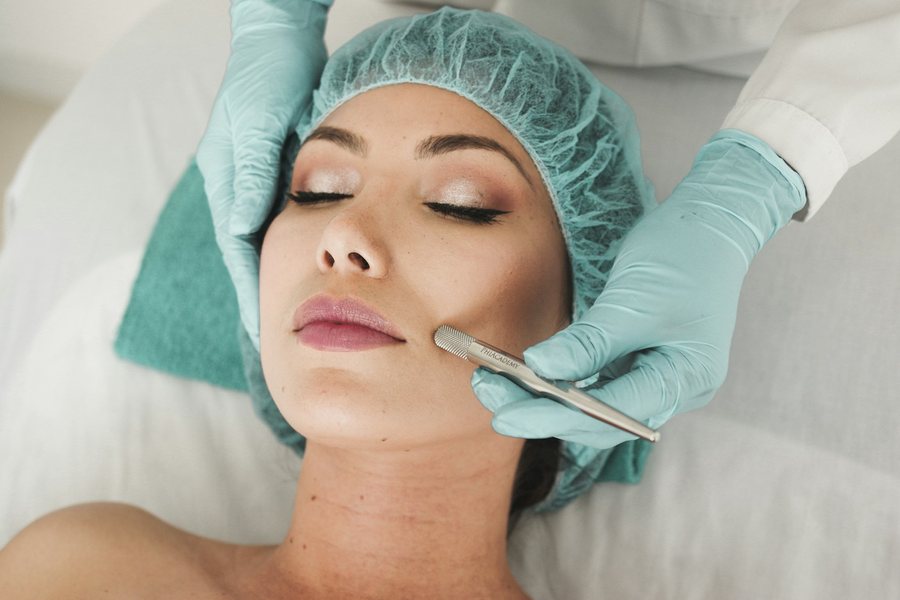
Nobody books a first appointment because of an offer. They book because they stopped being afraid.
Aesthetics is a category where the purchase involves someone's face, a needle or a laser, real recovery time, and the possibility of an outcome they cannot undo. Price is rarely the barrier. Risk is.
Which means the marketing job is not persuasion. It is de-risking.
What patients actually research
Before booking, in roughly this order:
- Who is doing the treatment — credentials, experience, how long they have been doing this specific thing
- What it actually looks like — results on people who resemble them
- What can go wrong — and whether anyone will say so honestly
- Recovery reality — the real downtime, not the marketing version
- Cost — usually last, and usually a smaller factor than clinics assume
A practice that answers all five clearly and publicly will out-convert one running a better offer, every time.
Show the practitioner, constantly
The single highest-return content in this category is the person who will be holding the device, talking plainly to camera about what they do and how they think about it.
Not glossy. Not scripted. Explaining who is a good candidate, who is not, what they would not recommend and why. Patients are choosing a person, and they are trying to work out whether that person is careful.
Practices that market the clinic instead of the practitioner are marketing the least interesting thing they have.
Results content, responsibly
Before-and-after content is the most persuasive asset in aesthetics and the easiest place to create a problem. Rules worth holding to:
- Written consent for every image, specific to the channels you will use it on. Get it at the time, in writing, not retroactively.
- Consistent conditions. Same lighting, same angle, same distance, no makeup changes. Inconsistent conditions look like manipulation, because usually they are.
- State the specifics. Treatment, number of sessions, time elapsed. A result at six months presented as if it were immediate is a complaint waiting to happen.
- Never guarantee an outcome. Individual results vary is not a disclaimer to bury — it is the truth.
- Follow your regulator and your platform. Advertising rules for medical treatments are specific, they differ by treatment type, and platforms enforce their own on top. Check both before publishing, not after a takedown.
None of this weakens the marketing. Practices that are visibly careful in their advertising read as practices that are careful with patients — which is the entire proposition.
The consultation is the conversion point
Most of this category's revenue is decided in a consultation, which makes everything upstream a booking-generation exercise and everything downstream a retention exercise.
- Make the consultation itself the offer. Free or low-cost, clearly explained, no obligation stated plainly.
- Answer the phone and the DMs fast. Aesthetic enquiries are emotional and time-sensitive; a slow reply loses them to the clinic that answered.
- Send the information before the appointment. A patient who arrives informed converts far better than one being educated in the room.
- Follow up after. Most people who do not book on the day are not saying no; they are thinking.
Retention is the business
Acquisition costs in aesthetics are high and rising. The practices with healthy economics are the ones where patients return on a schedule:
- Rebooking before the patient leaves, every time
- Treatment-appropriate reminders when the effect is genuinely wearing off
- Aftercare content that continues the relationship between visits
- Membership or package structures that make the next visit a default rather than a decision
The Miami context
This is one of the most saturated aesthetics markets in the country, with a bilingual patient base and a strong seasonal pattern — demand rises ahead of season and around events. That saturation makes differentiation on trust, credentials and honesty far more effective than differentiation on price, which every competitor can match by Friday.
The bottom line
Market the practitioner, show results honestly and compliantly, answer fast, and build the rebooking habit. In a category where the barrier is fear rather than cost, the clinic that is most transparent usually wins.
Want patient acquisition built on trust? Let's talk.