
An opening day is the only time a business gets to be new. Most waste it by starting a week before.
A good opening is not one loud day. It is six weeks of building a list of people who already want to come, followed by a month of turning first visits into habits. This is the plan we use for a new shop, restaurant, studio or second location.
Weeks 6 and 5: claim the ground
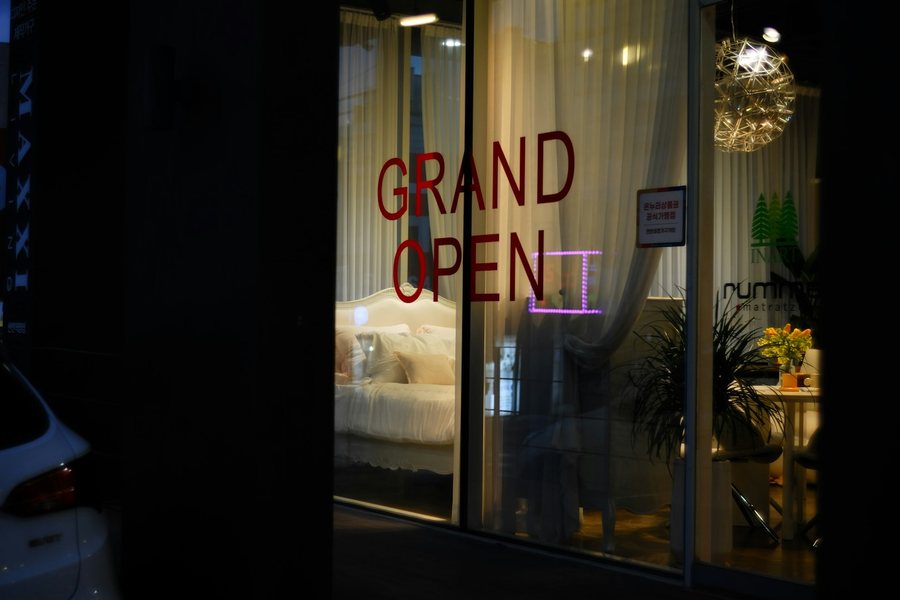
- Put the news on the building. A window wrap or sign with "opening soon," the handle, and a QR code to a sign-up page. The people who walk past every day are your first customers.
- Build one sign-up page. Name, email, and a promise: be the first to know the date. A list you own beats any follower count. See why email still works.
- Create the Google Business Profile for the new address now, marked with the future opening date, so it shows up in maps on day one.
- Start the story. Post the build-out: the empty space, the first delivery, the sign going up. People root for something they watched being built.
Weeks 4 and 3: win the neighbors and the press
- Walk the block. Introduce yourself to every business within a few minutes' walk. Bring samples or a card for their staff. A neighbor who likes you sends customers for years.
- Find a partner. One nearby business with the same customer and a different product. Plan one shared offer for opening week. More in strategic collaborations.
- Pitch local press with a real story, not an announcement: why this town, what is different, who is behind it. Offer photos, a tasting and an interview. Our digital PR guide covers the pitch.
- Shortlist local creators. Check where their followers live, not just how many they have. Thirty local creators with engaged neighbors beat one big name from another city.
Week 2: the soft opening
Open quietly before you open loudly. A friends-and-family night, then a preview for press and creators, does three jobs at once:
- The team practices on a forgiving crowd
- You capture photos and video of a full room before the public arrives
- Creators post in the days leading up to opening, when it helps most
Give creators a simple brief so the content is usable later. See writing a brief that works.
Week 1: announce the date
- Tell the list first. They signed up to hear it before anyone else, so keep the promise.
- Give a reason to come on day one. A limited item, a gift for the first guests, or a first-week menu special. Avoid deep discounts that teach people to wait for the next one.
- Run local ads in a tight radius around the address, using the soft-opening video. See Meta ads for local business.
- Brief the team on the story, the menu and how to ask for a review.
Opening day
- One person whose only job is content: the line, the first customer, the reactions
- A photo spot that includes the name, so every guest post is an ad
- A way to capture contacts at the counter: a QR code for a return offer works well
- Post during the day, not the day after. A line online builds the line outside.
The 30 days after
This is where most openings fade. The second and third visit matter more than the first.
- Ask every happy guest for a review in the first month. A new listing with recent reviews climbs fast. See reviews and reputation.
- Email the list a reason to return in week two.
- Start one weekly habit such as a flavor of the week or a regular event night.
- Reuse the opening content in ads for another month.
What to measure
- Sign-ups before opening
- Opening week visits and sales against a normal week by month three
- Reviews in the first 30 days
- Repeat visits from the opening week crowd
- Press and creator posts, and how many people each one sent
The bottom line
Start six weeks out, build a list, make friends on the block, open softly, give people a reason to come on day one and another to come back. We are running this plan right now for DaVinci Gelato's new shop in Lauderdale-by-the-Sea.
Opening a new location? Let's talk.