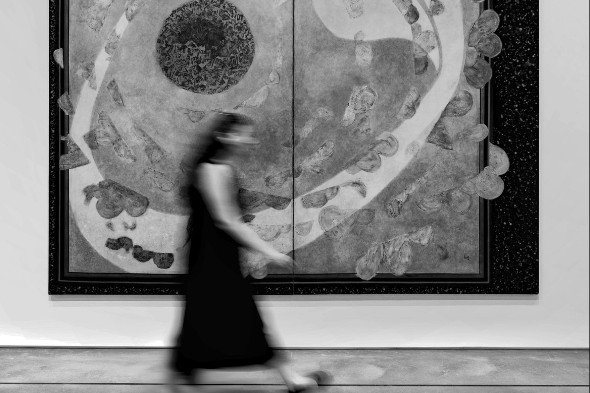
Art Basel is not F1. Same city, completely different room.
Miami hosts two marketing super-weekends a year. In May, the Grand Prix brings speed, spectacle, and a crowd that wants to be seen. In December, Art Basel Miami Beach brings something quieter and, for most brands, much harder to earn: a room full of people whose entire professional identity is built on knowing the difference between something real and something rented.
Art Basel Miami Beach 2026 runs December 4–6 at the Miami Beach Convention Center, with VIP preview days on December 2–3. The wider Miami Art Week — the satellite fairs, the hotel takeovers, the dinners, the Wynwood and Design District programming that most brands actually activate against — runs roughly November 30 through December 6.
Which means that as of today, you are about fourteen weeks out. That is enough time to do this well. It is not enough time to do it slowly.
Here is the playbook.
First, understand who is actually in the room
The mistake brands make with Art Basel is treating it as a luxury audience. It is not one audience. It is at least four, and they do not respond to the same things:
- Collectors and patrons. Small in number, enormous in influence. They are being hosted by galleries, auction houses, and private banks all week. Your activation is competing with a private dinner someone has been invited to for eleven years.
- The art world trade. Gallerists, advisors, curators, critics, fair staff. They are working. They are exhausted. They are also the people who decide whether your brand's involvement gets described as "interesting" or "embarrassing" in the group chat.
- The industry-adjacent crowd. Fashion, design, hospitality, real estate, tech money. This is the biggest commercially relevant segment for most brands, and the one most likely to convert.
- Miami. The locals, the creators, the nightlife economy, the people who live here the other fifty-one weeks. They can make your activation feel like part of the city or like an occupying force.
Before you scope anything, write down which of those four you are actually trying to reach. Brands that skip this step end up building an activation for "everyone," which in practice means an open bar with a logo on it.
The five activation archetypes that work during Art Week
1. The artist commission
You fund a real work by a real artist, and the brand's role is patron rather than protagonist. Done properly, this is the single most durable thing a brand can do during Art Week — the work outlives the week, the artist's audience becomes part of yours, and the press framing is generous.
Done badly, it is a logo painted on a wall by someone you found on Instagram in October.
The test: would the artist have made this work anyway, and would they be proud to have it in their portfolio? If the answer is no, you have not commissioned art. You have bought decoration.
2. The dinner series
Twenty to forty people, one long table, no step-and-repeat, no programming beyond the meal. During Art Week the dinner is the currency — it is where dealing happens, where relationships get made, and where a brand can be genuinely useful by convening people who wanted to meet anyway.
This is also the highest-leverage play for brands with modest budgets. Three excellent dinners across the week will out-perform one large party at almost any spend level under $200K.
3. The hotel or venue takeover
Faena, the Design District, the Bass, Nautilus, Rubell — the venue partly determines the audience before you have programmed a single thing. A takeover works when the brand and the venue share an actual aesthetic. It fails when the brand is obviously renting credibility by the square foot.
Note the geography carefully: an activation on Miami Beach and an activation in Wynwood are two different events with two different guest lists, because during Art Week nobody crosses a causeway twice in one evening.
4. The retail or product moment
A limited drop, a capsule with an artist, a physical object that only exists during the fair. Art Week audiences respond to scarcity that has a reason behind it — a real collaboration, a real edition size, a real end date — and ignore scarcity that is purely marketing.
Design District placement matters more than Convention Center proximity for this archetype. That is where the walking, buying, browsing traffic actually is.
5. The private room
A suite, a lounge, a members' space, a boat — unbranded or lightly branded, invitation only, no content, no press. Its entire purpose is to give twenty important relationships somewhere civilized to sit during the busiest week of their year.
This produces zero social proof and, frequently, the highest return of anything on this list. It shows up in revenue in the second quarter, not in an impressions report in December.
What reads as art-washing — and why it costs you
The art world has an unusually sensitive detector for brands using culture as a costume. Five patterns that reliably trigger it:
- The wall you commissioned that is really an ad. If the artwork's composition is built around the logo, it is an ad. Everyone can tell.
- The "curated by" credit with no curator. Borrowing the vocabulary of the art world without hiring anyone from it. Curators are not expensive relative to the rest of your budget, and their involvement is visible in the result.
- Buying the aesthetic without paying the artists. Exposure is not a fee. During the one week of the year when the entire industry is watching, this is the fastest way to become a story you did not want.
- The activation with no reason to exist. If your brand has no relationship to art, design, craft, or making things, the honest move is a great dinner — not a gallery pastiche.
- Programming over the art. A DJ so loud nobody can look at anything. Art Week guests will forgive an under-produced room. They will not forgive being unable to have a conversation.
Budget: what Art Week activations actually cost
Honest ranges, based on what brands spend to do these properly in Miami:
- Dinner series (2–3 hosted dinners, 30 guests each, real venue, real chef): $40K–$120K
- Artist commission (mid-career artist, one substantial work, install and de-install): $60K–$250K
- Retail or capsule moment (Design District pop-up, 5–7 days, staffed and produced): $150K–$450K
- Venue takeover (hotel or cultural space, multi-day, programmed): $400K–$1.5M
- Full brand house (space, commissioned work, dinners, talent, content, security): $1.5M+
Where the money goes that people forget to budget: install and strike windows (Art Week venues charge for both), insurance and art handling, security, permitting, staffing at Art Week rates, and content capture. Where it gets wasted: gifting nobody asked for, over-staffing, and venues chosen for their name rather than their fit.
The fourteen-week timeline
If you are starting now, this is the sequence that keeps you out of trouble.
Late August to mid-September — decide and lock
- Pick your one archetype. Not three.
- Lock the venue. Good Art Week venues are largely gone by late September, and the ones still available in November are available for a reason.
- Set the guest-list target: how many people, from which of the four audiences, and who owns the relationship with each.
- If you are commissioning an artist, this is the last comfortable moment to start that conversation. Production takes longer than you think.
Late September to October — build
- Creative direction locked and produced — not still in revisions.
- Talent, chef, curator, and creator agreements signed with usage rights specified in writing. Get the contract terms right now, not in the week of.
- Permits, insurance, and any on-water or public-space approvals filed.
- Invitations designed. First wave out by mid-October — the calendars you care about fill in October, not November.
November — confirm and pre-produce
- Second invitation wave, then individual outreach for the twenty guests who actually matter.
- Content plan finalized: what gets shot, by whom, published where, and how fast.
- Run of show with real white space in it. Over-programmed rooms empty out early.
- Follow-up plan built before the week. Who calls whom on December 8, and about what.
Week of — December 1 to 6
- Assume traffic doubles every travel estimate. Build your run of show around causeway reality.
- One person whose only job is the door. The door is the activation.
- Publish same-day, not next-week. Art Week content has a forty-eight hour half-life.
Measuring it honestly
Impressions are the wrong headline metric for this week, because the audience is small by design and the value is concentrated. Better measures:
- Qualified attendance. Of the people you actually wanted, how many came? That number, not total headcount.
- Earned coverage quality. One paragraph in a publication the art world reads beats forty aggregator pickups.
- Relationship advancement. Named accounts that moved from cold to warm during the week.
- Owned-channel lift. Follower quality and saved posts, not just reach.
- Pipeline at ninety days. The real one. Track it in March.
The bottom line
Art Basel rewards brands that show up as participants in a culture rather than sponsors of one. The activations people still talk about in February were not the biggest — they were the ones where somebody clearly cared about the work, the room, and the people in it.
You have fourteen weeks. That is enough for one excellent idea, properly produced. It is not enough for four mediocre ones.
If you want the map of where to place that idea, read our Miami Art Week 2026 guide — the fairs, the neighborhoods, and where a small budget goes furthest. And if the rest of your fourth quarter is still unscoped, start with the Q4 marketing calendar.
Planning an Art Week activation? Let's talk. We build the Miami event programs that brands come back for.